What is actually happening to crypto and how should you invest in it?
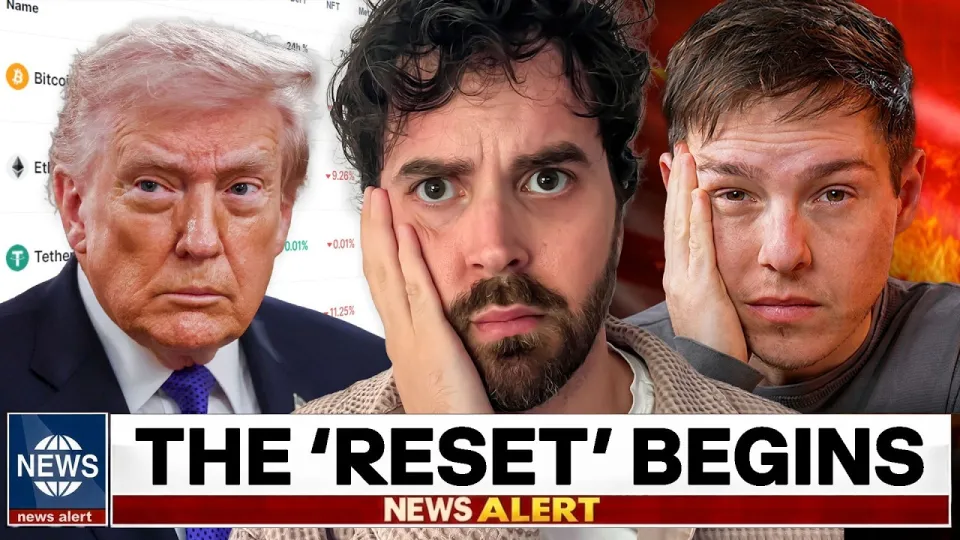
Video: WTF Is Actually Happening To Crypto?! (And How to Invest)
Need articles like this for your video? They help promote it on YouTube and Google — order them in the Telegram bot @sat_sit_bot. It writes articles around your video, embeds the video and publishes them on popular niche websites (no ads). Your first 50 articles are free.
· based on the channel Altcoin Daily
Crypto in 2026 is being repriced by institutional adoption rather than retail speculation. The short answer to what is actually happening: banks and asset managers are building tokenized versions of real financial products, and Morgan Stanley projects tokenized assets could reach $10 trillion by 2030. For an individual investor, the practical response is to hold a core of Bitcoin and Ethereum, add a small basket of infrastructure tokens tied to tokenization, and buy steadily through volatility instead of timing entries. New accounts can start with a Coinbase sign-up bonus and reduced trading fees.
What Morgan Stanley's crypto prediction actually says
The headline number is $10 trillion in tokenized assets by 2030, and it is worth understanding what that figure does and does not include. It is not a Bitcoin price target. It is an estimate of the total value of real-world assets — money market funds, government bonds, private credit, real estate, equities — that could be issued and settled on public or permissioned blockchains instead of legacy back-office systems.
Why the number is plausible:
- Settlement on a shared ledger removes layers of intermediaries, cutting the time for a bond trade from days to minutes.
- Fractional ownership opens products that were previously reserved for institutions — private credit, infrastructure debt — to smaller tickets.
- Major custodians and asset managers already run tokenized money market funds, so the infrastructure exists rather than being theoretical.
- Stablecoins have proven that dollar-denominated tokens can clear hundreds of billions in volume, which is the same plumbing tokenized funds need.
The skeptical read is equally important. Banks have published optimistic blockchain forecasts before, and previous estimates slipped because of regulation and because legacy systems are expensive to replace. A $10 trillion figure by 2030 implies roughly a 250x expansion from the current base of tokenized assets — that only works if crypto becomes genuine financial plumbing rather than a speculative side market.
Which coins actually capture the tokenization trend
Tokenization revenue does not flow evenly to every token, and that distinction matters more than any single price prediction. Value accrues to networks that host the assets, provide settlement, supply data, or handle compliance and identity.
- Ethereum (ETH) is where the majority of tokenized funds and stablecoins are issued. Its fee burn and staking yield give ETH a direct link to on-chain activity.
- Bitcoin (BTC) remains the monetary asset and the deepest liquidity in the market; it benefits from the same institutional bid without needing tokenization to succeed.
- Chainlink (LINK) supplies price feeds, proof of reserve and cross-chain messaging that tokenized funds require to operate safely.
- Ondo (ONDO) is one of the best-known issuers of tokenized US Treasury products, making it a direct play on the theme.
- Solana (SOL) competes for high-throughput payments and consumer applications, with lower fees than Ethereum mainnet.
- XRP targets cross-border settlement with banks, a different but adjacent slice of the same institutional market.
The honest caveat: most altcoins will not survive to 2030, and holding a token because it is mentioned in a video is not a thesis. Position sizing should reflect that — a core in BTC and ETH, satellites in infrastructure names, and nothing so large that a 90% drawdown changes your life.
How an average investor can build a position without timing the market
The realistic path for a retail investor is boring and mechanical: define a basket, buy it on a schedule, and let time do the work. Nobody reliably calls the bottom, and the investors who did well in previous cycles were mostly the ones who kept buying through drawdowns.
A workable process:
- Decide a monthly amount you can lose entirely without changing your lifestyle.
- Split it roughly 50–70% Bitcoin and Ethereum, with the remainder in a handful of tokens tied to themes you can explain in one sentence.
- Automate the purchase on the same day each month, so price swings become an advantage rather than a decision.
- Rebalance once or twice a year, trimming whatever has run furthest.
- Move long-term holdings to self-custody; exchange balances carry counterparty risk.
A simple equal-weight basket across BTC, ETH, SOL, LINK and one tokenization name is a defensible starting point. What is not defensible is leverage: borrowing against volatile collateral is how retail portfolios get liquidated at exactly the wrong moment.
Common doubts about crypto investing, answered honestly
Three objections come up constantly, and each deserves a straight answer rather than a sales pitch.
"Banks have been wrong before." True. Institutional forecasts are marketing as much as analysis. Treat the $10 trillion figure as a directional signal about where capital is flowing, not as a guarantee, and size positions so that being wrong is survivable.
"Isn't this all going to zero when AI takes over?" That argument assumes AI systems need no money, no settlement and no proof of ownership. Whatever form an AI-driven economy takes, it will still need to move value and verify who owns what, which is precisely what blockchains do.
"Won't holdings just get frozen or seized?" Custodial accounts can be restricted, and regulated tokenized assets will carry identity requirements by design. That is an argument for holding a portion in self-custody and for understanding that privacy-focused assets trade convenience for protection. The trade-off is real in both directions.
A fourth, quieter doubt is whether this cycle is different at all. The difference is who is buying: spot ETFs, corporate treasuries and asset managers now hold positions that retail-dominated cycles did not have.
Key links and resources from the breakdown
- Coinbase bonus and fee reduction: http://www.coinbase.com/aff/altcoindaily
- Altcoin Daily on X: https://x.com/AltcoinDaily
- WEEX AI Wars event: https://www.weex.com/events/human-vs-ai-weex-hackathon?vipCode=oz5p
- Bitunix registration bonus: https://www.bitunix.com/register?vipCode=AltcoinDaily
- Altcoin Daily merchandise: https://altcoindailyshop.myshopify.com
The bottom line on crypto and how to invest in it
The tokenization thesis is the most concrete institutional argument crypto has had, and the $10 trillion projection by 2030 is a useful benchmark to track rather than a promise. Bitcoin and Ethereum remain the core holdings for most portfolios, with tokenization-linked altcoins as smaller, higher-risk positions. The winning behaviour is unglamorous: steady accumulation, sensible sizing, self-custody for long-term holdings. Altcoin Daily breaks down the Morgan Stanley forecast and the retail investment angle in the video above, and new accounts can claim the Coinbase deposit bonus and 80% fee reduction to start with lower costs.
Key takeaways
- Morgan Stanley projects tokenized assets could reach $10 trillion by 2030, roughly a 250x expansion from today's base.
- Tokenization means putting bonds, funds, real estate and private credit on-chain as transferable digital tokens rather than paper claims.
- Bitcoin and Ethereum remain the core holdings for most portfolios, with altcoins as higher-risk satellite positions.
- Dollar-cost averaging into a fixed basket over several years is the standard retail approach; no single coin guarantees the outcome.
- Custody matters: exchange balances carry counterparty risk, so hardware wallets are recommended for long-term holdings.
Questions & answers
Is the $10 trillion tokenization forecast mostly Bitcoin and Ethereum, or does it need altcoins?
Most of the value would sit in tokenized funds, bonds and private credit, which are issued predominantly on Ethereum and similar smart-contract networks. Bitcoin captures the monetary demand rather than the issuance. Altcoins only matter if they deliver real settlement, data or compliance functions that those assets need.
Can I still get the fee reduction if I already have a Coinbase account?
Promotional rates are typically tied to new registrations made through a referral link, and existing accounts usually do not qualify automatically. Check the terms on the offer page before assuming the bonus applies, and compare the fee tier against your current one.
Is dollar-cost averaging better than buying a lump sum now?
Dollar-cost averaging removes the need to predict short-term price direction, which is the main risk for retail investors. A lump sum can outperform if prices rise steadily, but it concentrates timing risk. Most people are better served by a fixed monthly schedule they can maintain through a drawdown.
How many altcoins should a small portfolio hold?
A handful is enough — typically three to five beyond Bitcoin and Ethereum, each tied to a theme you can explain clearly. Holding a little of everything dilutes conviction and multiplies the chance of owning something that goes to zero. Size altcoins as satellites, not as the core.
Source: WTF Is Actually Happening To Crypto?! (And How to Invest) · Markdown version