How to Trade Meme Coins Like a Full-Time Trader Without Blowing Up Your Account
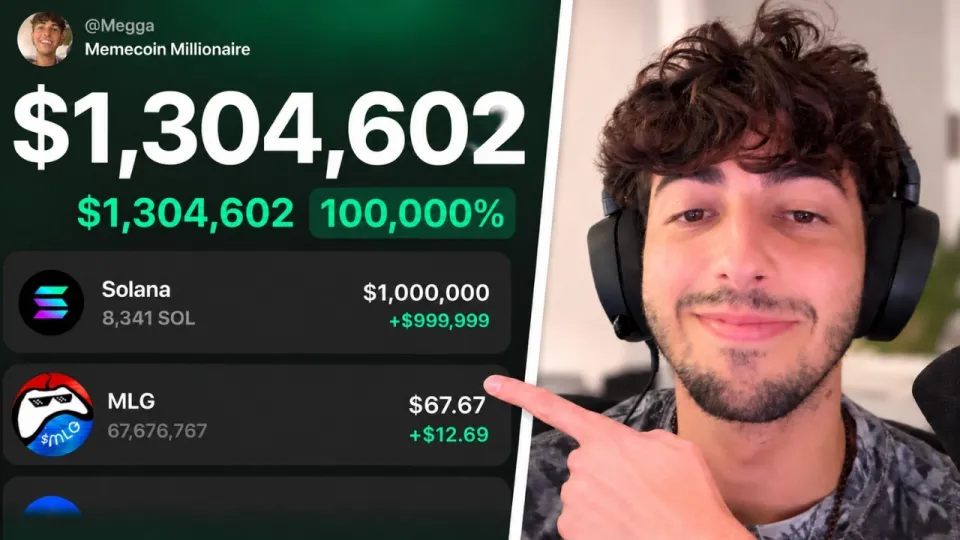
Video: How I Made $1,000,000 Trading Memecoins (FULL BREAKDOWN)
Need articles like this for your video? They help promote it on YouTube and Google — order them in the Telegram bot @sat_sit_bot. It writes articles around your video, embeds the video and publishes them on popular niche websites (no ads). Your first 50 articles are free.
· based on the channel Megga
Meme coin trading is the practice of buying early-stage tokens with no fundamentals, riding community-driven momentum and exiting before liquidity dries up. Done with rules, it can compound a small account; done without them, it turns the trader into exit liquidity for someone else. The free course linked from the Megga breakdown is available here: free meme coin trading course.
What meme coin trading actually is and why the $1,000,000 number is misleading
A meme coin is a token whose price depends almost entirely on attention, not on revenue or product. That single fact defines the whole game: there is no cash flow to anchor a valuation, so price is set by the order book and by how many new buyers arrive after you. Every dollar of profit in this market comes out of another participant's deposit, which is exactly the point viewers of the Megga video raise when they say someone has to be the liquidity.
The million-dollar figure in the title is a result, not a method. It is the sum of many small and medium positions, a handful of outsized winners and a long tail of losses that had to be kept small enough to survive. Treating the headline as a target is the fastest way to size positions like a person who already has a million, which is how accounts die.
The three skills that separate profitable meme coin traders from liquidity
Profitable meme coin traders are not better at predicting which token moons; they are better at processing information and at cutting losers. The skill stack is narrow and repeatable.
- Narrative reading. Understanding which meta is currently attracting fresh capital — a new chain, a launchpad trend, a cultural moment — and being early to the second wave rather than late to the first.
- On-chain verification. Checking contract ownership, holder distribution, liquidity locks and wallet clusters before entering. A token with a single wallet holding 30% of supply is a countdown timer, not an opportunity.
- Exit execution. Deciding in advance what percentage gets sold at 2x, 5x and 10x, and sticking to it when the chart is green and the group chat is euphoric.
The hours matter only if they are spent on these three things. Nine to twelve hours of screen time filled with scrolling launch feeds and buying whatever trends is not work — it is gambling with extra steps.
How to structure a full-time trading day
A full-time meme coin routine is built around information flow, not around the chart. The traders who last treat the day as a pipeline: research before the market wakes up, execution during peak activity and review after it cools.
- Pre-session (1–2 hours): review overnight launches, check which wallets from your watchlist bought what, note the narratives gaining traction.
- Active session: execute only setups that match your written criteria; keep position size fixed as a percentage of the account, not as a feeling.
- Post-session (1 hour): log every trade with the reason for entry, the reason for exit and the emotion at the moment of the click. This journal is the only reliable feedback loop in a market with no earnings reports.
Splitting the day this way is what makes long hours sustainable. Without a structure, fatigue produces the classic pattern: a big win followed by a bored, oversized bet that gives it back.
Risk rules that keep a meme coin account alive
Risk management in meme coins is mostly about surviving the tokens that go to zero, because some of them always will. A few hard rules do most of the work.
- Never put more than a small fixed percentage of the account into one token, regardless of conviction.
- Assume any position can lose 100%; size it so that outcome is annoying, not account-ending.
- Keep trading capital in a separate wallet from long-term holdings, and never sign transactions from a wallet that holds savings.
- Treat wallet security as part of risk: phishing drains and malicious approvals remove capital faster than any bad trade.
- After a large win, reduce size rather than increase it — the next trade is statistically no better than the last one.
The drawdown stories are the useful ones. A trader who hits a 200x and then loses the proceeds to a drained wallet has not been unlucky; they have been under-secured. Recovery starts with going back to basics: fewer tokens, smaller size, stricter checks.
Common questions from traders in the trenches
Most doubts from people following this kind of breakdown fall into a few recurring categories, and each has a practical answer.
"I am in drawdown — should I stop?" Not necessarily, but reduce size and return to the checklist. Trading through a drawdown at full size turns a temporary setback into a permanent one.
"Do I need a big account to join trading groups?" No, but a PnL screenshot is a weak entry ticket. What experienced traders actually look for is whether you follow a process, share useful research and do not ask for calls every five minutes.
"I have a job — can I still do this?" Yes, with a narrower window. Pick one or two hours of high-quality research and execution instead of pretending to be full-time; a focused hour beats a distracted eight.
"How do I know a narrative is real?" You do not, and that is the honest answer. You build a thesis, define what would prove it wrong and size the position so the answer does not matter too much.
Useful links
- Free meme coin trading course from the breakdown
- Trading platform with low fees
- Megga on Twitch
- Megga on TikTok
- Megga on X
Final takeaway
The Megga breakdown is worth watching not for the million-dollar headline but for the framing around it: losses, isolation and repeated testing are part of the process, and consistency is the only edge that compounds. Meme coin trading rewards traders who treat it as a job with rules — research, fixed sizing, verified contracts and a journal — and punishes those who treat it as a lottery ticket. Start with the free course via the Megga course link, define your risk limits before your first trade, and judge yourself on process rather than on any single result.
Key takeaways
- Meme coin trading is a liquidity game: every profit is paid by another participant, so entry timing and exit discipline matter more than the narrative.
- Consistency beats intensity: screen time of 9–12 hours a day only works if those hours are spent on research, tracking wallets and journaling, not on random clicks.
- A 200x on a single token means nothing if a phishing drain or one oversized position wipes the wallet afterwards.
- Small accounts can network into trading groups, but PnL alone does not qualify anyone — shared process and risk rules do.
- The Megga breakdown frames the million-dollar result as the output of surviving drawdowns, not of avoiding them.
Questions & answers
How much capital do I need to start trading meme coins?
There is no minimum, but the size of your account determines how you should play. Small accounts should focus on a few high-conviction setups with strict exits rather than spreading across dozens of tokens, because fees and failed transactions eat a disproportionate share of a small balance.
Is meme coin trading just taking money from other people?
In a market with no cash flow, every profit is funded by another participant's loss, so yes — the transfer is explicit. What separates trading from a rug is disclosure and mechanics: verified contracts, locked liquidity and no hidden wallet control. Check those before entering, because you are the liquidity if you skip it.
How do I recover after a big loss or a drained wallet?
Go back to basics: smaller position sizes, a written checklist and a short break from new tokens until the process feels routine again. Review what actually failed — sizing, security or thesis — and fix that one thing before scaling back up.
Can I trade meme coins part-time while working a job?
Yes, if you narrow your window instead of stretching it. One or two focused hours of research and execution beat a distracted full day, and a fixed routine prevents the boredom-driven oversized trades that damage most part-time accounts.
Source: How I Made $1,000,000 Trading Memecoins (FULL BREAKDOWN) · Markdown version